

Introduction
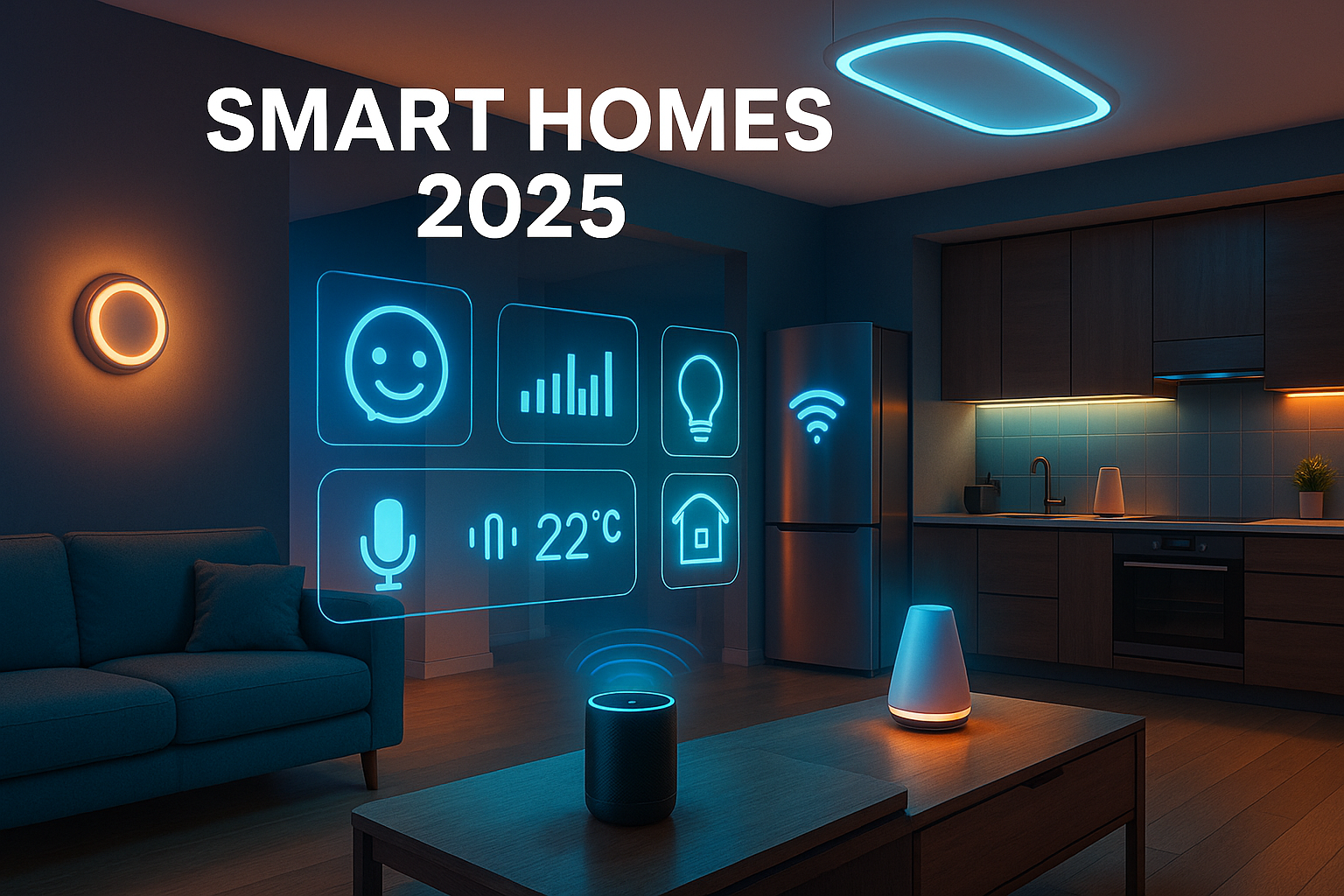
Smart homes are revolutionizing how we live.
From voice assistants to automated lighting, technology is making homes more convenient, energy-efficient, and secure.
This blog explores the rise of smart homes and what we can expect in the future.
1. What Is a Smart Home?
A smart home integrates technology and connected devices to automate daily tasks.
- Voice assistants like Alexa, Google Assistant, and Siri
- Smart lighting, thermostats, and security systems
- IoT devices connecting appliances, entertainment, and home management
Impact: Enhances convenience, comfort, and efficiency.
2. Energy Efficiency & Sustainability
- Smart thermostats and energy monitoring systems optimize electricity use
- Solar panels and smart energy grids integrate with home systems
- Automated systems reduce waste and carbon footprint
Impact: Cost savings and environmentally friendly living.
3. Home Security Innovations
- Smart locks, cameras, and motion sensors enhance safety
- AI-driven systems detect unusual activities and notify homeowners
- Remote monitoring via smartphones or tablets
Impact: Increased peace of mind and proactive security management.
4. Voice Control & Automation
- Automate lighting, climate, entertainment, and daily routines
- Voice commands simplify multitasking
- Scheduled automation improves lifestyle efficiency
Impact: Simplifies everyday tasks and enhances comfort.
5. AI Integration in Smart Homes
- AI learns user preferences for personalized experiences
- Predictive automation adjusts settings based on routines
- AI-powered assistants handle tasks, reminders, and scheduling
Impact: Makes homes more intuitive and responsive.
6. Smart Kitchens & Appliances
- Smart refrigerators track inventory and suggest recipes
- Connected ovens and coffee machines automate cooking
- Appliances integrate with apps for remote control
Impact: Saves time, reduces waste, and enhances convenience in daily life.
7. Health & Wellness Monitoring
- Smart beds, fitness trackers, and air quality monitors
- AI detects sleep patterns, stress levels, and indoor pollution
- Integrates health insights for better lifestyle choices
Impact: Promotes well-being and healthy living at home.
8. Entertainment & Connectivity
- Smart TVs, speakers, and streaming devices create immersive experiences
- Multi-room audio and VR integration enhance home entertainment
- High-speed connectivity ensures seamless operation of devices
Impact: Elevates leisure and entertainment experiences.
9. Challenges & Considerations
- Data privacy and cybersecurity risks
- High initial costs for full smart home setups
- Compatibility issues between devices from different brands
Impact: Awareness and proper management are crucial for safe, effective smart homes.
10. What’s Next for Smart Homes?
- Fully integrated AI home management systems
- Smart cities with interconnected homes and energy grids
- More affordable and accessible smart devices for all households
- Enhanced sustainability and eco-friendly automation
Impact: Smart homes will become smarter, greener, and more connected, shaping the future of modern living.
Conclusion
The rise of smart homes is transforming daily life, making homes more convenient, secure, and energy-efficient.
Key takeaways:
- AI and IoT will continue to make homes intuitive and responsive
- Energy efficiency and sustainability are core trends
- Security, entertainment, and health integration enhance lifestyles
- The future promises more connected, affordable, and smarter living spaces
Embracing smart home technology ensures comfort, convenience, and a futuristic lifestyle in the years ahead.
