

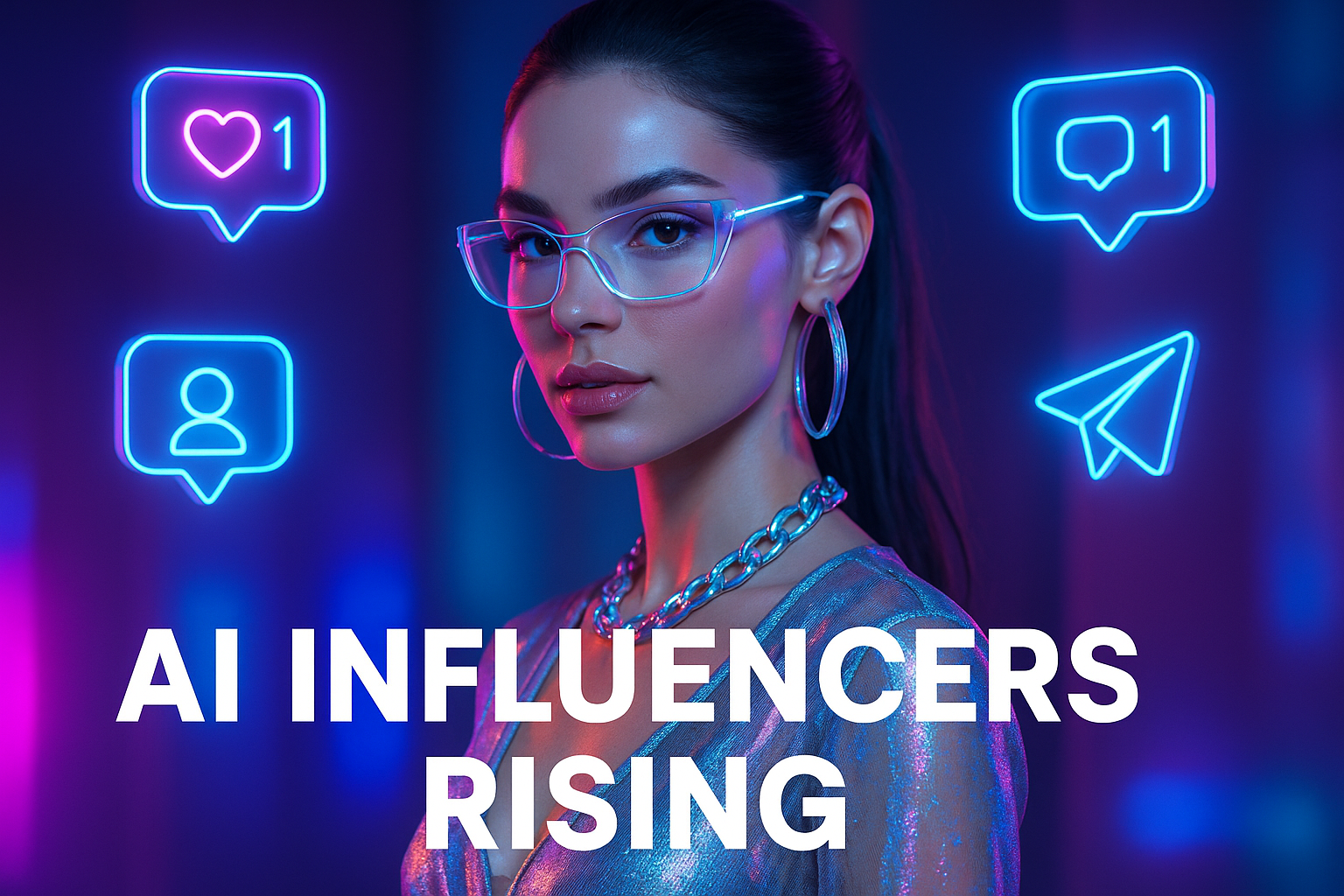
Introduction
Influencer marketing has taken the world by storm, and a new player is emerging: AI-generated influencers.
These digital personas, created entirely through artificial intelligence, are gaining popularity on social media, collaborating with brands, and influencing millions of followers — all without being real humans.
This blog explores the rise of AI influencers, their advantages, and the implications for marketing and social media.
1. What Are AI-Generated Influencers?
AI-generated influencers are virtual personalities:
- Created using CGI, AI modeling, and deep learning
- Have social media profiles on Instagram, TikTok, and YouTube
- Interact with audiences through posts, stories, and collaborations
They can look hyper-realistic or have stylized appearances.
2. Examples of Popular AI Influencers
Some AI influencers are already global sensations:
- Lil Miquela – Instagram star, model, and musician
- Shudu – Virtual supermodel
- Imma – Japanese AI influencer with a massive following
Brands collaborate with them just like real human influencers.
3. Why Brands Use AI Influencers
AI influencers offer several advantages:
- Control: Brands can control content, messaging, and appearance
- Cost-effective: No travel, schedules, or unpredictable behavior
- Consistency: AI influencers can post 24/7 without downtime
- Safety: No scandals or PR issues
4. Marketing & Advertising Potential
AI influencers are perfect for:
- Product promotions and brand campaigns
- Fashion modeling and virtual photoshoots
- Interactive campaigns and immersive storytelling
Brands can test different styles, outfits, or messages in real-time.
5. Social Media Engagement
AI influencers are highly engaging:
- They participate in trends, memes, and viral challenges
- Can collaborate with real influencers
- Use AI-driven analytics to post at optimal times
This ensures high reach and engagement.
6. Ethical Considerations
While AI influencers are innovative, they raise concerns:
- Transparency: Followers may not realize they are interacting with AI
- Authenticity: Can AI “relate” to real human experiences?
- Influence: Potential manipulation in marketing and politics
Brands must navigate these issues carefully.
7. AI-Generated Influencers & Creativity
AI influencers open new creative possibilities:
- Fashion designers can showcase virtual clothing
- Musicians can collaborate with AI personalities
- Storytelling and virtual events can reach global audiences
This expands the creative landscape beyond physical constraints.
8. The Future of AI Influencers
Expect AI influencers to evolve rapidly:
- Hyper-realistic avatars: Indistinguishable from real humans
- Interactive personalities: Real-time responses using AI chatbots
- Virtual events and concerts
- Global reach: Multiple languages and cultural adaptations
They could become mainstream in entertainment, marketing, and social media by 2025–2030.
9. Human & AI Collaboration
AI influencers don’t replace humans but complement them:
- Collaboration with human creators for hybrid campaigns
- Testing marketing strategies before using real influencers
- Creating innovative storytelling formats
AI-human synergy is the next frontier of digital influence.
Conclusion
AI-generated influencers are changing the social media landscape:
- Brands can control campaigns like never before
- Audiences interact with digital personalities that feel real
- Ethical and transparency issues require attention
- Creativity and marketing possibilities are expanding
The rise of AI influencers shows that the future of social media is virtual, interactive, and technologically driven.
