

Introduction
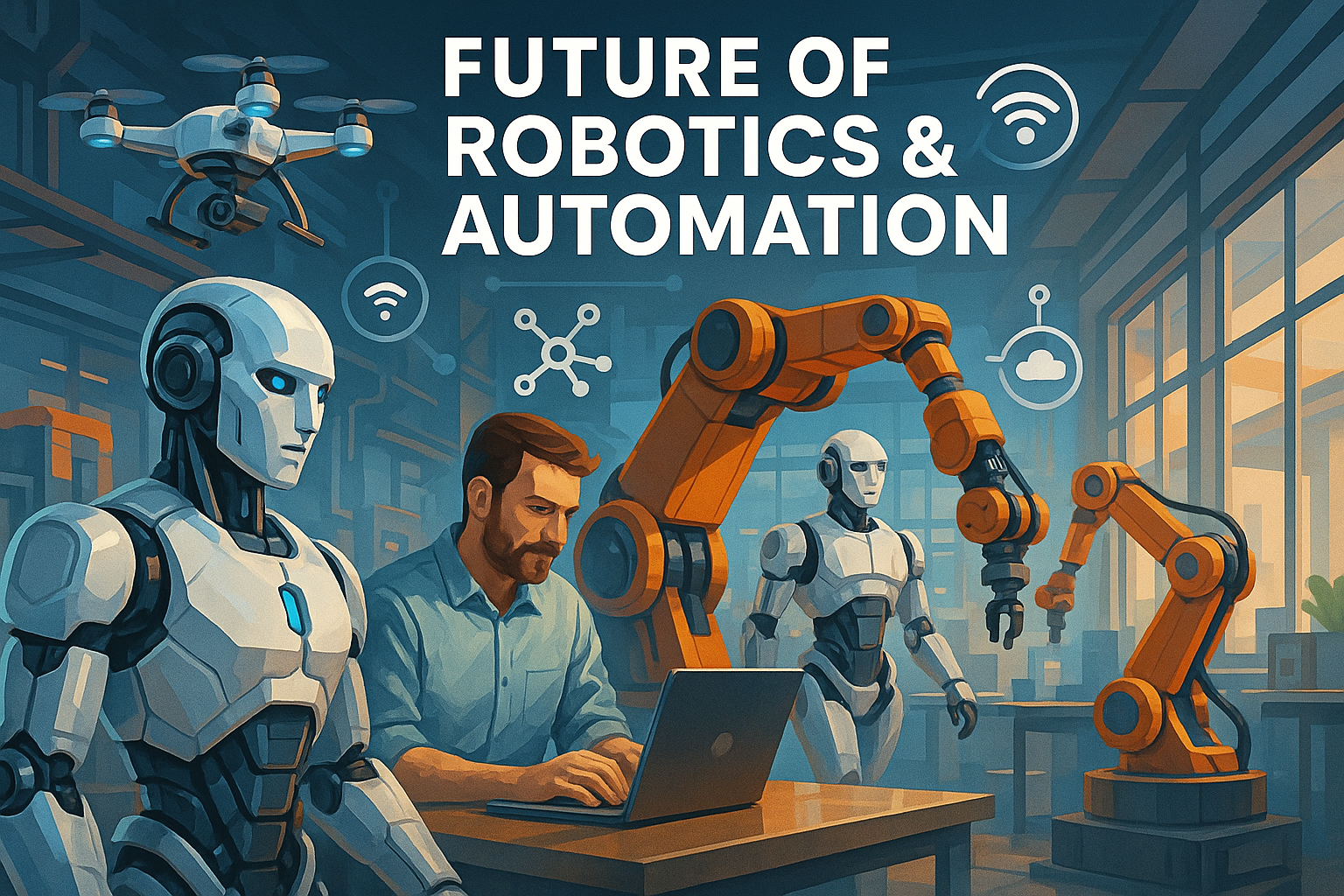
Robotics and automation are transforming industries, workplaces, and daily life.
From manufacturing to healthcare, automation is enhancing efficiency, safety, and productivity.
This blog explores the future of robotics and automation and what we can expect in the coming years.
1. Robotics in Manufacturing
- Industrial robots handle repetitive and hazardous tasks
- AI-powered robots optimize production lines and quality control
- Cobots (collaborative robots) work alongside humans
Impact: Increased efficiency, reduced workplace injuries, and consistent product quality.
2. Automation in Healthcare
- Surgical robots assist doctors with precision operations
- AI-powered diagnostic tools analyze medical data quickly
- Automated pharmacies and lab systems improve workflow
Impact: Enhances patient care, reduces errors, and increases operational efficiency.
3. Autonomous Vehicles
- Self-driving cars, trucks, and delivery drones
- AI navigation and obstacle detection for safer transportation
- Integration with smart city infrastructure
Impact: Safer roads, faster logistics, and reduced human workload.
4. Robotics in Daily Life
- Personal assistant robots for chores, companionship, and monitoring
- Smart home integration with AI assistants
- Elderly care and accessibility support
Impact: Improves quality of life and supports independent living.
5. AI & Machine Learning Integration
- Robots learn from data to perform complex tasks
- Predictive maintenance and problem-solving in real-time
- Adaptable machines capable of dynamic decision-making
Impact: Robots become more autonomous, intelligent, and versatile.
6. Automation in Agriculture
- Drones and automated machinery for planting, harvesting, and monitoring
- AI-based analysis of soil, crops, and weather conditions
- Reduces labor costs and increases productivity
Impact: Efficient, sustainable, and scalable agricultural practices.
7. Robotics in Logistics & Warehousing
- Automated warehouses and robotic inventory management
- AI-guided sorting, packaging, and shipping
- Faster, more accurate, and cost-effective supply chain operations
Impact: Revolutionizes logistics and e-commerce efficiency.
8. Challenges & Considerations
- Job displacement and workforce reskilling needs
- Ethical considerations in AI decision-making
- High initial investment and technology maintenance
Impact: Requires careful planning and policy development to balance innovation and societal needs.
9. Future Trends
- Swarm robotics for coordinated multi-robot tasks
- Soft robotics for delicate and flexible operations
- Integration with IoT and smart cities for fully automated systems
- Advanced humanoid robots capable of social interactions
Impact: Expands robotics applications in every facet of life and industry.
10. Preparing for the Future
- Invest in STEM education and robotics training
- Embrace AI and automation technologies in business
- Focus on reskilling and upskilling the workforce
Impact: Ensures individuals and organizations thrive in an automated world.
Conclusion
The future of robotics and automation promises efficiency, innovation, and improved quality of life.
Key takeaways:
- Robotics is transforming manufacturing, healthcare, logistics, and daily life
- AI integration makes robots smarter and more adaptable
- Ethical, social, and economic considerations are essential
- Staying informed and prepared is crucial for the automated future
Embracing robotics and automation today ensures a smarter, safer, and more productive tomorrow.
