

Introduction
Technology is transforming sports, and wearable devices are at the forefront of enhancing athlete performance.
From smartwatches to biometric sensors, wearable tech provides real-time data, insights, and analytics to improve training, prevent injuries, and optimize performance.
This blog explores how wearable technology is shaping modern sports and helping athletes achieve peak performance.
1. Real-Time Performance Tracking
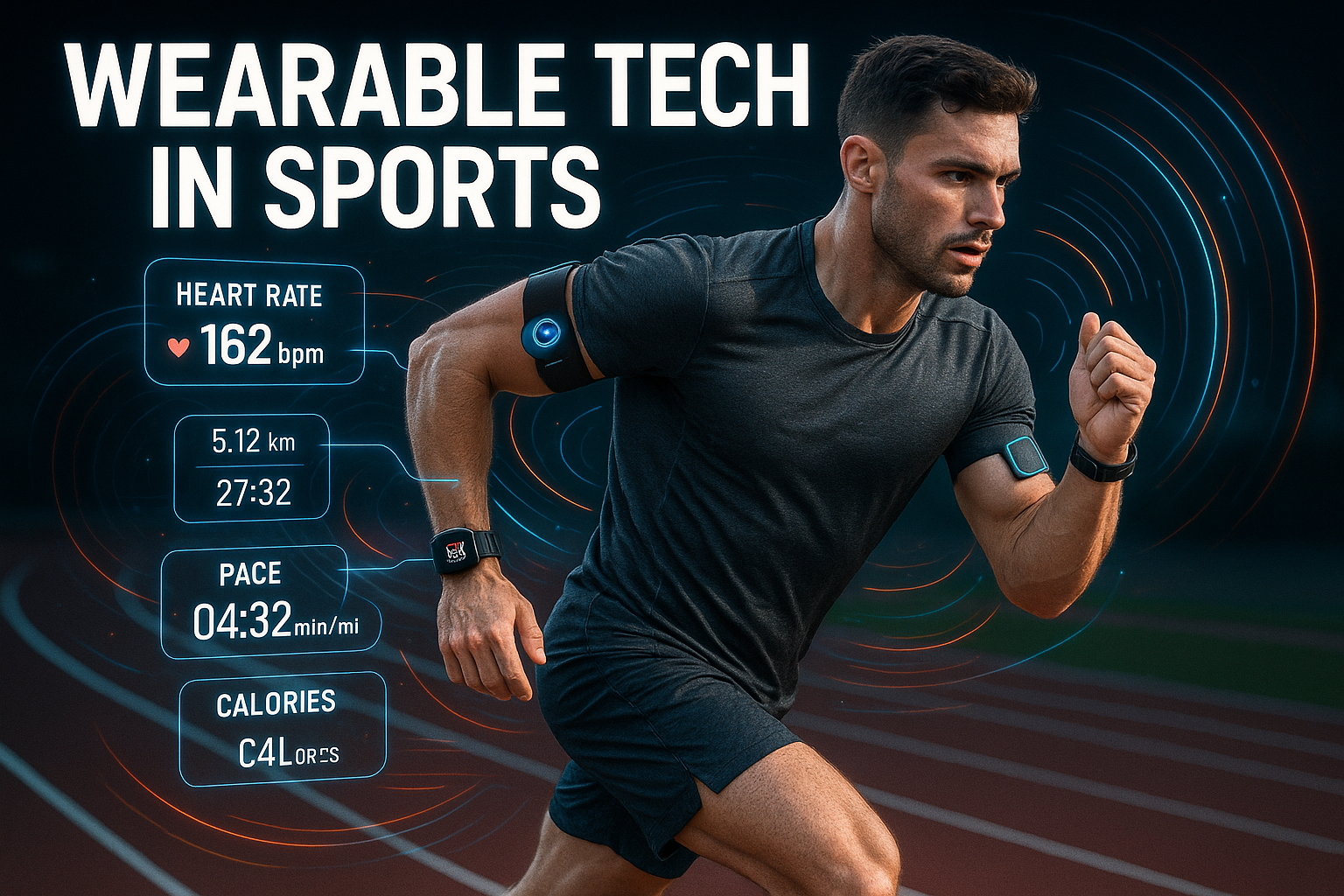
Wearables track a variety of metrics in real-time:
- Heart rate, oxygen levels, and calories burned
- Distance covered, speed, and acceleration
- Sleep patterns and recovery
Impact: Athletes and coaches can monitor performance instantly and adjust training accordingly.
2. Injury Prevention
Wearable devices help detect early signs of fatigue or strain:
- Motion sensors analyze biomechanics
- Pressure sensors track stress on joints and muscles
- Alerts warn athletes before overtraining
Impact: Reduces injuries and ensures longer athletic careers.
3. Personalized Training Programs
Data collected by wearables enables tailored workouts:
- AI-driven insights create customized training plans
- Focus on weak areas or underdeveloped muscles
- Adjust intensity based on recovery and performance metrics
Impact: Training becomes more efficient and effective.
4. Recovery Optimization
Wearables help optimize recovery:
- Sleep tracking and analysis
- Heart rate variability monitoring
- Guidance for rest periods and nutrition
Impact: Athletes recover faster, reducing burnout and improving overall performance.
5. Enhanced Mental Performance
Some wearable tech focuses on cognitive and mental aspects:
- Biofeedback for stress and anxiety management
- Brainwave tracking to optimize focus and reaction time
- Mindfulness and meditation apps integrated with wearable devices
Impact: Mental sharpness is enhanced alongside physical fitness.
6. Data-Driven Coaching
Coaches use wearable data to make informed decisions:
- Tactical insights and player positioning
- Individual and team performance analytics
- Video integration with biometric data for deeper analysis
Impact: Coaching is more precise, strategic, and effective.
7. Competitive Advantages
Top athletes leverage wearables to gain an edge:
- Track opponents’ performance patterns
- Optimize energy usage during games
- Simulate scenarios using collected data
Impact: Wearable tech provides measurable advantages in competitive sports.
8. Popular Wearable Tech in Sports
- Smartwatches and fitness trackers (Apple Watch, Garmin)
- Biometric sensors (WHOOP, Hexoskin)
- GPS trackers for speed and distance
- Smart clothing and shoes with embedded sensors
Impact: A wide range of devices caters to different sports and needs.
9. Integration With AI & Analytics
- AI analyzes massive amounts of wearable data
- Predictive insights for injury risk and peak performance times
- Optimized training schedules based on individual trends
Impact: Sports performance is becoming increasingly science-driven.
10. The Future of Wearable Tech in Sports
- Implantable sensors for even more accurate data
- Real-time coaching via AR and VR integration
- Smart stadiums collecting team-wide performance metrics
- Advanced predictive analytics for strategy and game planning
Impact: Wearable technology will continue to transform training, competition, and athlete longevity.
Conclusion
Wearable technology is revolutionizing sports by providing data-driven insights, enhancing training, preventing injuries, and improving mental and physical performance.
Key takeaways:
- Real-time tracking and monitoring optimize training
- Injury prevention and recovery tools extend athletic careers
- AI and analytics personalize coaching and performance strategies
- Future innovations will continue to push the limits of human potential
Athletes using wearable tech today are setting new standards, proving that science and technology are integral to peak performance in modern sports.
