

Introduction
In today’s fast-paced world, balancing work and personal life has become increasingly challenging.
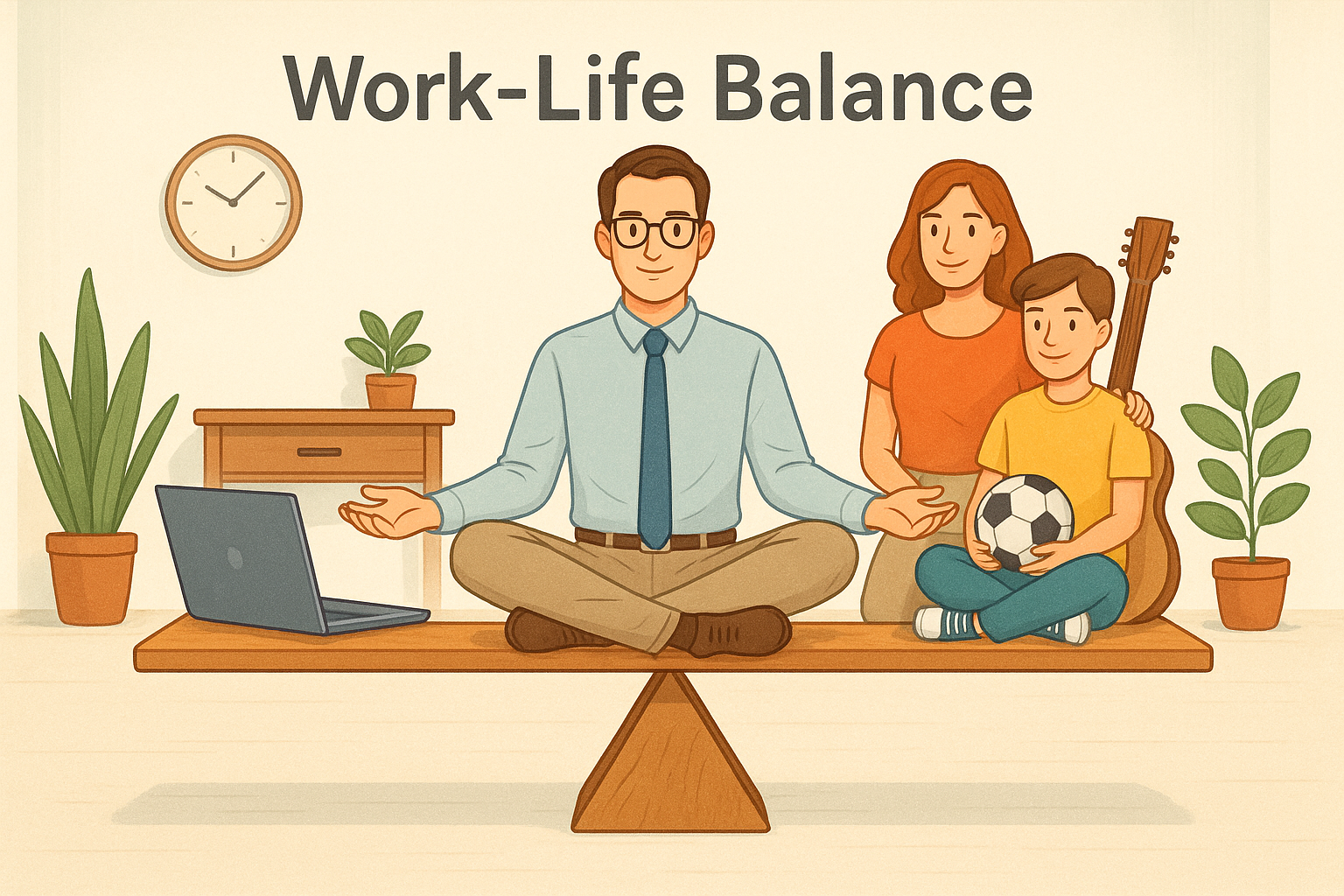
Maintaining a healthy work-life balance is essential for physical health, mental well-being, and productivity.
1. Set Clear Boundaries
- Define specific work hours and stick to them
- Avoid checking emails or messages outside of work time
- Communicate boundaries with colleagues and family
Impact: Reduces stress and prevents work from encroaching on personal life.
2. Prioritize Tasks Effectively
- Use to-do lists and prioritize tasks based on urgency and importance
- Focus on high-impact activities instead of multitasking
- Break projects into manageable chunks
Impact: Increases productivity while freeing time for personal life.
3. Learn to Say No
- Avoid taking on excessive commitments that overwhelm you
- Politely decline tasks that don’t align with your priorities
- Focus on quality over quantity in both work and personal life
Impact: Prevents burnout and preserves energy for important responsibilities.
4. Schedule Personal Time
- Allocate time daily for hobbies, family, and self-care
- Treat personal time as seriously as work meetings
- Plan activities that rejuvenate your mind and body
Impact: Enhances overall happiness and reduces stress.
5. Practice Mindfulness & Relaxation
- Meditation, deep breathing, or yoga can help manage stress
- Stay present in both work and personal life to improve focus
- Avoid dwelling on past mistakes or future worries
Impact: Promotes mental clarity and emotional balance.
6. Use Technology Wisely
- Leverage productivity apps to organize tasks efficiently
- Limit social media or unnecessary notifications during personal time
- Use digital tools to streamline work rather than increase stress
Impact: Enhances efficiency without compromising personal time.
7. Delegate & Seek Support
- Share responsibilities at work and home when possible
- Trust colleagues or family members to handle tasks
- Don’t hesitate to ask for help when needed
Impact: Reduces workload and creates more time for balance.
8. Focus on Health & Well-Being
- Prioritize sleep, exercise, and a healthy diet
- Take short breaks during work to refresh your mind
- Avoid sacrificing health for work achievements
Impact: Supports long-term energy, focus, and overall quality of life.
9. Disconnect Regularly
- Take breaks from devices and work-related notifications
- Use weekends or vacations for complete mental and physical reset
- Explore nature, hobbies, or social activities without distractions
Impact: Prevents burnout and strengthens personal relationships.
10. Reflect & Adjust Regularly
- Review your work-life balance periodically
- Identify areas where you can improve or delegate
- Adapt your strategies as life and work demands change
Impact: Ensures a sustainable balance over time.
Conclusion
Maintaining work-life balance is essential for happiness, productivity, and well-being.
Key takeaways:
- Set boundaries, prioritize tasks, and schedule personal time
- Practice mindfulness, disconnect regularly, and delegate responsibilities
- Focus on health, self-care, and reflection to maintain long-term balance
By following these strategies, you can thrive professionally while enjoying a fulfilling personal life.
