

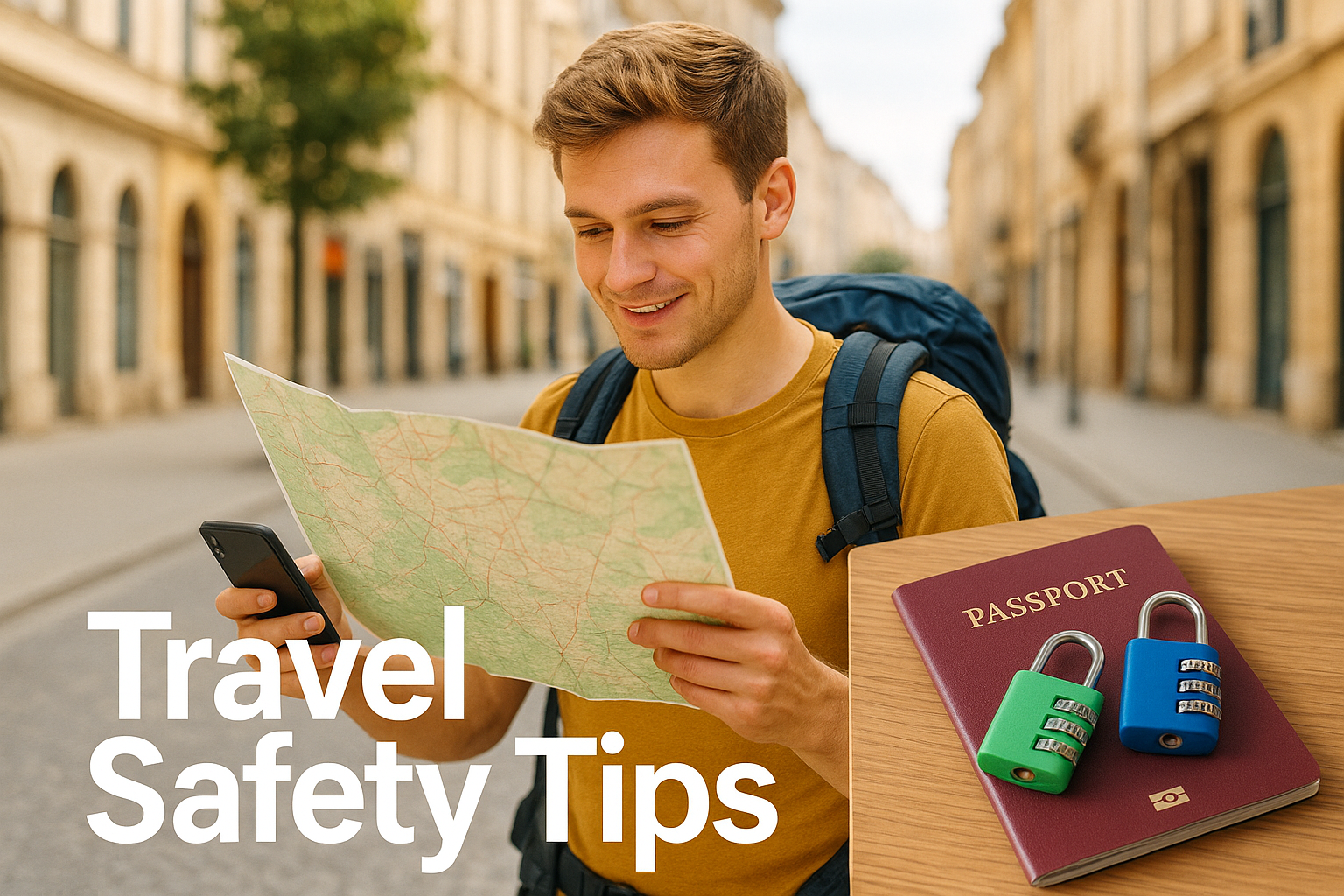
Introduction
Traveling is exciting, but safety should always be a top priority, especially for new travelers.
With careful planning and awareness, you can enjoy your adventures while staying safe and secure.
1. Research Your Destination
- Understand local laws, customs, and cultural norms
- Learn about areas to avoid and safety concerns
- Check travel advisories and weather conditions
Impact: Awareness reduces risks and prevents misunderstandings.
2. Keep Important Documents Safe
- Carry copies of your passport, ID, and travel insurance
- Use digital backups stored securely online
- Keep originals in a safe place, like a hotel safe
Impact: Protects against theft, loss, or emergencies.
3. Use Reliable Transportation
- Prefer licensed taxis, ride-sharing apps, or public transit recommendations
- Avoid hitchhiking or unverified transport services
- Be cautious when using rental vehicles
Impact: Ensures safer and more predictable travel experiences.
4. Secure Your Belongings
- Use anti-theft backpacks, locks, and RFID protection
- Keep valuables out of sight and avoid flashy displays
- Be cautious in crowded areas like markets or public transport
Impact: Minimizes the risk of theft and loss.
5. Stay Connected
- Share your itinerary with friends or family
- Keep a working phone with local SIM or roaming
- Use location-sharing apps when exploring new areas
Impact: Provides reassurance and allows quick help in emergencies.
6. Avoid Risky Situations
- Trust your instincts and avoid unsafe areas or late-night walks alone
- Be cautious with strangers and unfamiliar invitations
- Limit alcohol consumption in unfamiliar environments
Impact: Prevents potential danger and unsafe encounters.
7. Health Precautions
- Carry essential medications and a basic first aid kit
- Check for required vaccinations before traveling
- Stay hydrated, eat safely, and follow hygiene practices
Impact: Protects physical health and prevents illnesses.
8. Use Travel Insurance
- Covers medical emergencies, theft, and travel disruptions
- Choose policies suitable for your destination and activities
- Keep contact information for your insurance provider
Impact: Provides financial and emergency protection while traveling.
9. Learn Basic Local Phrases
- Know key phrases like “help,” “emergency,” and “police” in the local language
- Helps communicate quickly in critical situations
- Enhances local interactions and builds rapport
Impact: Increases confidence and safety in foreign environments.
10. Stay Alert & Trust Technology
- Use apps for maps, local alerts, and safety tracking
- Be aware of your surroundings and avoid distractions
- Keep emergency numbers handy
Impact: Combines modern tools with situational awareness for safer travel.
Conclusion
New travelers can enjoy their trips while staying safe by planning ahead, being aware, and using technology wisely.
Key takeaways:
- Research your destination and stay aware of risks
- Protect documents, belongings, and health
- Use travel insurance, reliable transport, and emergency contacts
- Trust your instincts and stay alert in unfamiliar places
Following these tips ensures a memorable and secure travel experience for first-time travelers.
